


Identity and history
The Clouser Minnow, also called the Clouser Deep Minnow, is a weighted baitfish streamer used as a bass fly and in saltwater, developed by Bob Clouser. Its defining features are a sparse wing and dumbbell eyes, with the hook point riding upward. It is not Clouser’s swimming nymph or a crayfish imitation.[8]
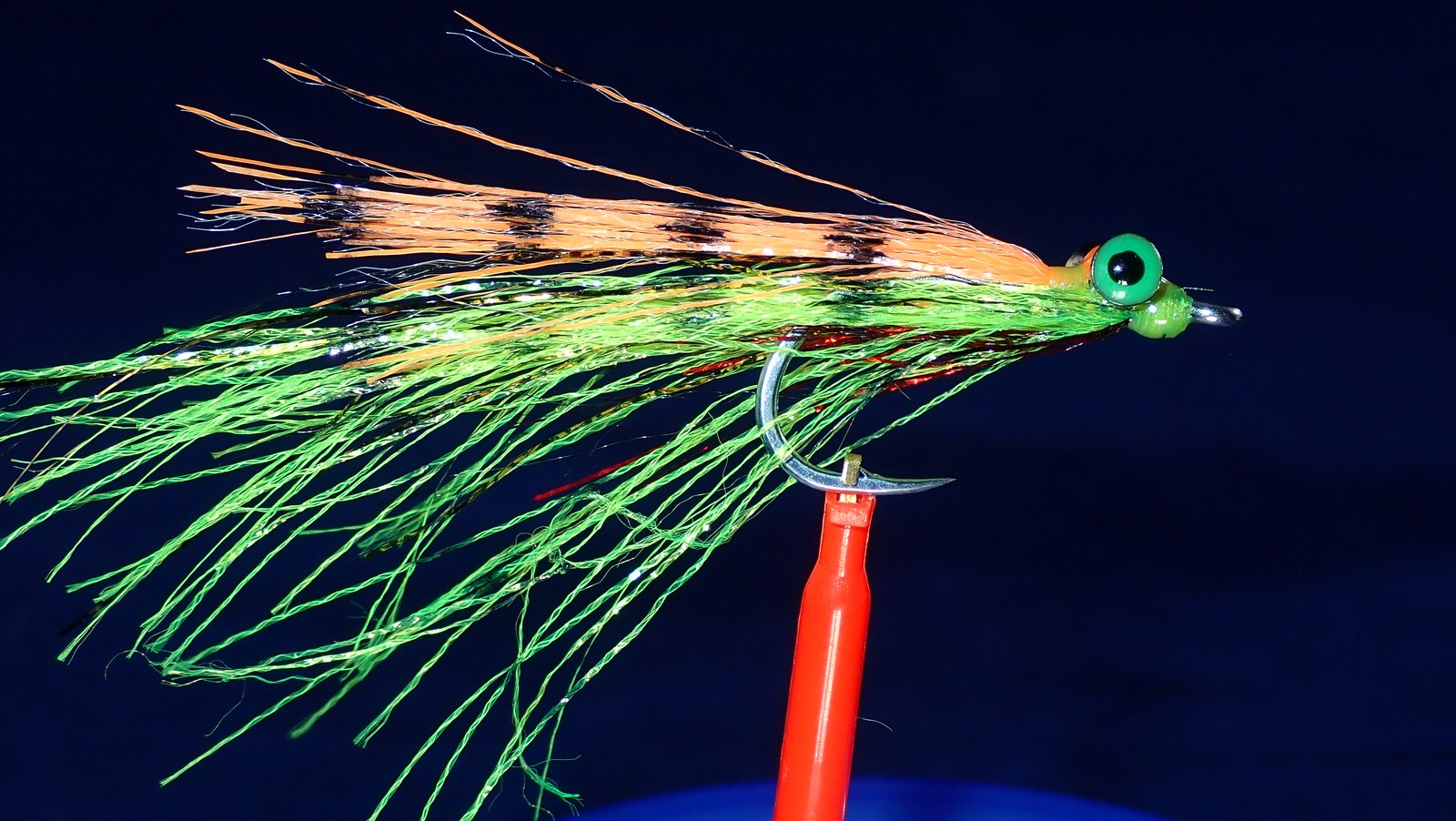

The commonly reported creation date is 1987: L.L.Bean gives that year, and Jack Rodgers’s Trout Unlimited account attributes the same date to a conversation with Clouser. Strong contemporary context comes from Lefty Kreh’s July 1989 article, now republished by Fly Fisherman, describing fishing the new pattern with Clouser on the Susquehanna in August 1988. These accounts place its development in the late 1980s, rather than establishing an earlier date.[8][9][10]


What it imitates and where it is used
This is a suggestion of a minnow or other small baitfish rather than a fully detailed replica. Kreh’s article covers the original smallmouth-bass setting and subsequent freshwater and saltwater use, including trout and bonefish. A sparse dressing is central to that translucent outline and helps the weighted fly sink.[8]
In South Africa, Frontier’s Salty Clouser is a separately specified, scaled-up saltwater version on a 2/0 hook. The shop markets it for garrick, kob and shad around estuaries and the shore. That listing establishes a local application and variant, not independent historical evidence or a guarantee for a particular venue.[12]

How to fish it
Let the weighted eyes take the fly down, then retrieve it so the wing and head can dip and dart. A slow retrieve is one option in Kreh’s account; Frontier also describes fast or slow strips for its saltwater version. Pauses change the presentation, so depth, current and the intended baitfish impression should guide the rhythm rather than a fixed universal retrieve.[8][12]
The upward hook point reduces some bottom snagging but does not make the fly snag-proof. Match eye weight to the depth and tackle: Clouser’s original tying sidebar links the eye position to the inverted swimming attitude, while Kreh notes that eye size affects sinking.[8]
Materials and variants
The classic dressing combines two colours of bucktail, flash, tying thread and dumbbell eyes on an appropriate freshwater or saltwater hook. Silver Shiner, Golden Shiner, chartreuse and sculpin colour schemes are documented in the 1989 article. Modern synthetic-wing and heavier saltwater adaptations should be labelled as variants, not silently substituted for that sparse bucktail construction.[8][12]
Tying reference and South African shop
Clouser’s own shop links to Bob Clouser Tying His Famous Minnow Pattern, verifying the relevance of the existing video. Use that external link or the written tying sidebar attributed to Bob Clouser. The video was not watched for this article. Frontier’s Salty Clouser listing provides the local specialist comparison.[8][11][12]
Watch Bob Clouser tie the Minnow
Bob Clouser’s own shop links to this Anglers Journal upload of his tying demonstration. It is a creator-endorsed reference; the uploader is Anglers Journal, not Clouser’s own channel. The written sources above provide the pattern’s history and practical context.
Video credit: Anglers Journal. Clouser’s shop endorsement. YouTube fallback if the player is unavailable. Playback may depend on consent, login or regional availability.
Sources
- [8] Fly Fisherman Throwback: Clouser’s Deep Minnow — Fly Fisherman; Lefty Kreh, with Bob Clouser tying sidebar. 2023-01-23; original July 1989. Retrieved 2026-11-24.
- [9] Fly Fishing Tips: How to Tie the Clouser Minnow — L.L.Bean; Emily Bastian. Undated. Retrieved 2026-11-24.
- [10] Giants and Minnows — Trout Unlimited; Jack Rodgers. 2019-08-07 displayed; extractor metadata 2019-08-08. Retrieved 2026-11-24.
- [11] Bob Clouser Ties His Famous Minnow — Clouser’s Fly Shop; Jackie Clouser. 2025-09-19. Retrieved 2026-11-24.
- [12] Salty Clouser — Frontier Fly Fishing. Undated. Retrieved 2026-11-24.
Sources checked 24 November 2026. Researched reference guidance, not a firsthand fishing report or independent fly test.